
Have you ever wondered why some jobs feel motivating and meaningful, while others feel boring and exhausting? The secret often lies in job design. Job design is not just about assigning tasks—it’s about shaping work in a way that benefits both employees and organizations.
In today’s fast-changing work environment, where burnout and disengagement are common, job design plays a critical role in creating productive, satisfying, and sustainable jobs.
Meaning of Job Design
Job design refers to the process of organizing tasks, duties, responsibilities, and workflows into a structured job role. It determines what work is done, how it is done, and why it is done.
Why Job Design Matters in Today’s Organizations
A well-designed job can boost motivation, improve efficiency, and reduce stress. A poorly designed job, on the other hand, can lead to boredom, frustration, and high employee turnover. Simply put, job design can make or break workplace performance.
Understanding the Concept of Job Design
Definition of Job Design
Job design is the systematic process of defining job roles by deciding:
- The content of the job
- The methods used to perform tasks
- The relationship between tasks and employees
It focuses on aligning organizational goals with employee needs.
Job Design vs Job Analysis
Job analysis collects information about a job, such as duties and skills required. Job design uses that information to structure and improve the job.
Job Design vs Job Enlargement
Job enlargement increases the number of tasks in a job, while job design focuses on the overall structure, meaning, and effectiveness of the job.
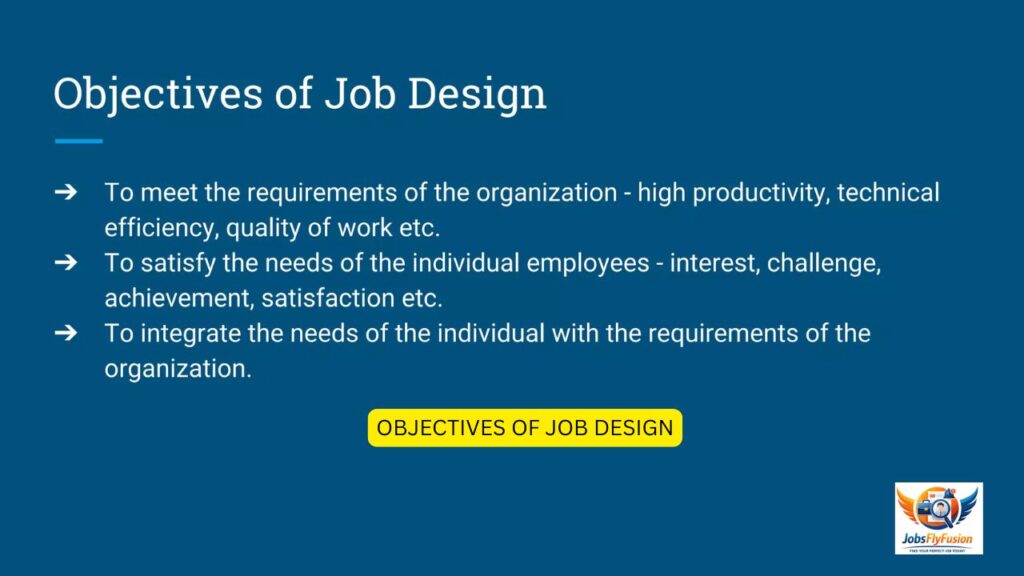
Objectives of Job Design
Improving Employee Productivity
A well-structured job reduces confusion and duplication of work. Employees know exactly what to do, leading to higher efficiency and output.
Enhancing Job Satisfaction
Jobs that offer variety, autonomy, and purpose are more satisfying. When people enjoy their work, they naturally perform better.
Reducing Employee Turnover
Good job design helps employees feel valued and engaged, reducing the chances of burnout and resignation.
Key Elements of Job Design
Task Variety
Repeating the same task every day feels like eating the same meal for months. Variety keeps work interesting and engaging.
Autonomy
Autonomy means giving employees control over how they perform their tasks. It builds trust and boosts motivation.
Feedback
Regular feedback helps employees understand their performance and improve continuously.
Skill Utilization
Jobs should allow employees to use their skills and talents fully. Underutilized skills lead to frustration and disengagement.
Importance of Job Design
Impact on Employee Motivation
Motivating jobs challenge employees, give them responsibility, and allow them to see the results of their efforts.
Role in Organizational Performance
Organizations with well-designed jobs experience higher productivity, better quality output, and improved customer satisfaction.
Effect on Work-Life Balance
Thoughtful job design can reduce stress and workload imbalance, promoting healthier work-life integration.
Approaches to Job Design
Classical Approach
This approach focuses on efficiency and productivity through task specialization. While effective for output, it may lead to monotony.
Behavioral Approach
The behavioral approach emphasizes employee satisfaction, motivation, and psychological needs.
Socio-Technical Approach
This approach balances technology and human needs, ensuring systems and people work together smoothly.
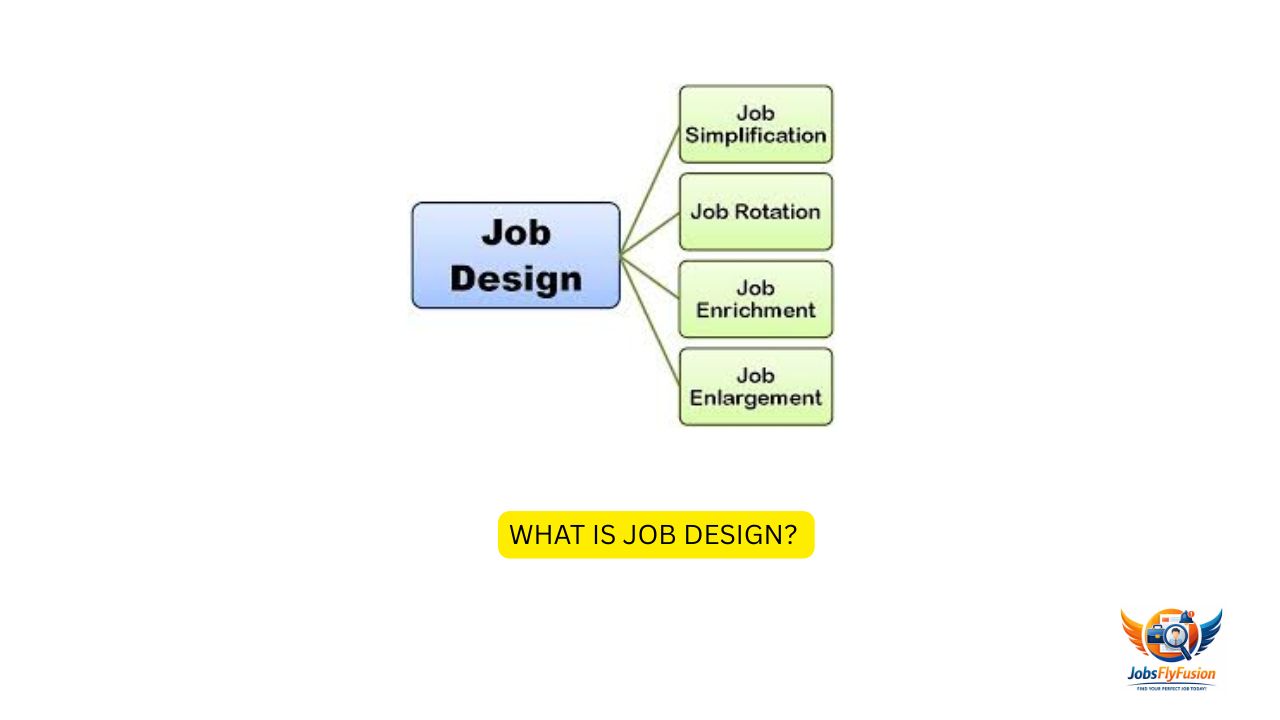
Techniques of Job Design
Job Rotation
Employees rotate between different jobs to gain new skills and reduce boredom.
Job Enlargement
Additional tasks of similar nature are added to increase task variety.
Job Enrichment
This technique adds responsibility, decision-making power, and growth opportunities to a job.
Job Simplification
Complex jobs are broken into simpler tasks, often used in mass production environments.
Job Design Models
Job Characteristics Model
This popular model explains how job design influences motivation.
Core Job Dimensions
- Skill variety
- Task identity
- Task significance
- Autonomy
- Feedback
Psychological States
These dimensions lead to meaningful work, responsibility, and knowledge of results—driving motivation and performance.
Factors Affecting Job Design
Organizational Factors
These include organizational structure, culture, and management style.
Environmental Factors
Economic conditions, labor market trends, and technology influence how jobs are designed.
Behavioral Factors
Employee attitudes, abilities, and expectations play a key role.
Job Design in the Modern Workplace
Job Design in Remote Work
Remote jobs require clear responsibilities, outcome-based performance measures, and strong communication channels.
Job Design in the Gig Economy
Gig roles focus on flexibility, task-based work, and autonomy rather than long-term job security.
Technology and Job Design
Automation and digital tools are reshaping jobs, making adaptability and continuous learning essential.
Advantages of Effective Job Design
Higher Employee Engagement
Engaged employees are emotionally invested in their work and contribute beyond basic requirements.
Better Quality of Work
Clear roles and meaningful tasks lead to higher accuracy and innovation.
Lower Absenteeism
Employees are less likely to skip work when they find their jobs rewarding.
Challenges in Job Design
Resistance to Change
Employees and managers may resist new job structures due to fear of uncertainty.
Over-Designing Jobs
Too much complexity can overwhelm employees instead of motivating them.
Skill Mismatch
If job requirements don’t match employee skills, performance suffers.
Steps Involved in Job Design
Job Analysis
Understand tasks, responsibilities, and required skills.
Identifying Job Objectives
Define what the job is meant to achieve.
Structuring Tasks and Responsibilities
Arrange tasks logically for efficiency and satisfaction.
Reviewing and Improving Job Design
Continuous feedback and improvement are essential.
Examples of Job Design
Job Design in Manufacturing
Assembly line jobs often use job rotation to reduce monotony.
Job Design in IT and Service Sector
These roles emphasize autonomy, problem-solving, and continuous learning.
Job Design in Startups
Startup roles are flexible, multi-skilled, and growth-oriented.
Future Trends in Job Design
AI and Automation
Routine tasks will be automated, pushing humans toward creative and strategic roles.
Employee-Centric Job Design
Organizations will focus more on employee well-being and purpose.
Flexible and Hybrid Roles
Jobs will become more adaptable to individual lifestyles and preferences.
Read also:-
- Which Job Is Best for Girl? A Complete Career Guide
- How Much Does a Nose Job Cost in India? A Complete Price & Procedure Guide
Conclusion
Job design is more than a management tool—it’s the backbone of a healthy workplace. When jobs are designed thoughtfully, employees feel motivated, valued, and empowered. Organizations benefit from higher productivity, innovation, and retention. In a world where work is constantly evolving, smart job design is no longer optional—it’s essential.
Frequently Asked Questions (FAQs)
1. What is job design in simple words?
Job design is the process of organizing tasks and responsibilities to make a job efficient and satisfying.
2. Why is job design important?
It improves employee motivation, productivity, and job satisfaction.
3. What are the main techniques of job design?
Job rotation, job enlargement, job enrichment, and job simplification.
4. How does job design affect motivation?
Well-designed jobs provide meaning, responsibility, and growth, which increase motivation.
5. Is job design relevant in remote work?
Yes, job design is crucial for clarity, accountability, and performance in remote roles.
 Follow Us On Google News
 Follow Us On WhatsApp

Leave a Comment